
✦ College Student Counselling Program
Build a Campus Where Students Can Reach Support Early
A structured counselling and mental health program for colleges and higher education institutions in Chennai, planned around your students, your academic calendar and the support your campus already offers.
- Qualified Psychologists · Confidential · Online & Offline · Tamil & English
The Challenge
Why Student Mental Health Deserves a Place in Your Support Structure?
College years bring many changes at once: new independence, academic expectations, shifting friendships and decisions about the future. No student faces all of this, but many meet some of it without knowing who to approach, or worry about being judged if they do.
Academic Pressure & Examination Stress
Semester exams, backlogs and the worry of disappointing family can leave a student anxious before they open a book. Concentration, sleep and routines may slip during exam weeks.
Career Uncertainty & Placement Anxiety
Placement drives, comparison with batchmates and doubts about the right path can make the final years feel heavy. Some students question their employability or feel behind choices others seem to have made.
Emotional Wellbeing & Anxiety
Persistent worry, low mood or a sense of being overwhelmed can sit quietly behind a student who still attends every class. Without room to talk, these feelings may begin to affect motivation and daily life.
Hostel Adjustment & Homesickness
Living away from family for the first time can bring homesickness, disturbed sleep and pressure to manage everything alone. Adjusting to roommates and unfamiliar routines often takes longer than students expect.
Peer Relationships & Social Pressure
Friendship difficulties, feeling left out, peer pressure and the end of a relationship can weigh on focus and confidence. Many students hesitate to mention these struggles to anyone on campus.
Self-Esteem, Identity & Digital Wellbeing
Constant comparison on social media, body image concerns and questions about who they are becoming can shape how students see themselves. Late-night scrolling and broken sleep may add to the strain.
Our Approach
Why Our Counselling Makes a Difference to Student Support?
Every institution is different, so these are components a college counselling program could include. The mix is decided with you during planning, not fixed in advance.
Individual Student Counselling
One-to-one confidential sessions where a student can talk through academic stress, relationships, family expectations or low mood with a psychologist, at their own pace.
Group Counselling & Peer Support
Small facilitated groups built around shared experiences, such as exam pressure or settling into hostel life, so students see that others carry similar worries.
Student Wellbeing Workshops
Practical sessions on stress, sleep, time management and emotional awareness that give students skills they can keep using without a counsellor in the room.
Examination Stress Management
Support timed around internal assessments and semester exams, covering planning, focus and handling anxiety before an exam and after results arrive.
Career Transition & Emotional Support
Space for final-year students to talk through placement pressure and the move from college to work or further study. Career guidance itself is covered under our education and career counselling.
Faculty Awareness & Student Referral Guidance
Helping faculty and student affairs teams notice when a student may be struggling and where to point them, without asking staff to take on a counsellor's role.
Mental Health Awareness Programs
Campus-wide conversations about stress and help-seeking, so that reaching out begins to feel ordinary rather than embarrassing.
Crisis Response & External Referral Pathways
Agreeing in advance how urgent situations are handled, and how students who need specialised or psychiatric care are referred to suitable professionals.
Student Wellbeing Spotlight
Student Wellbeing & Psychological Support
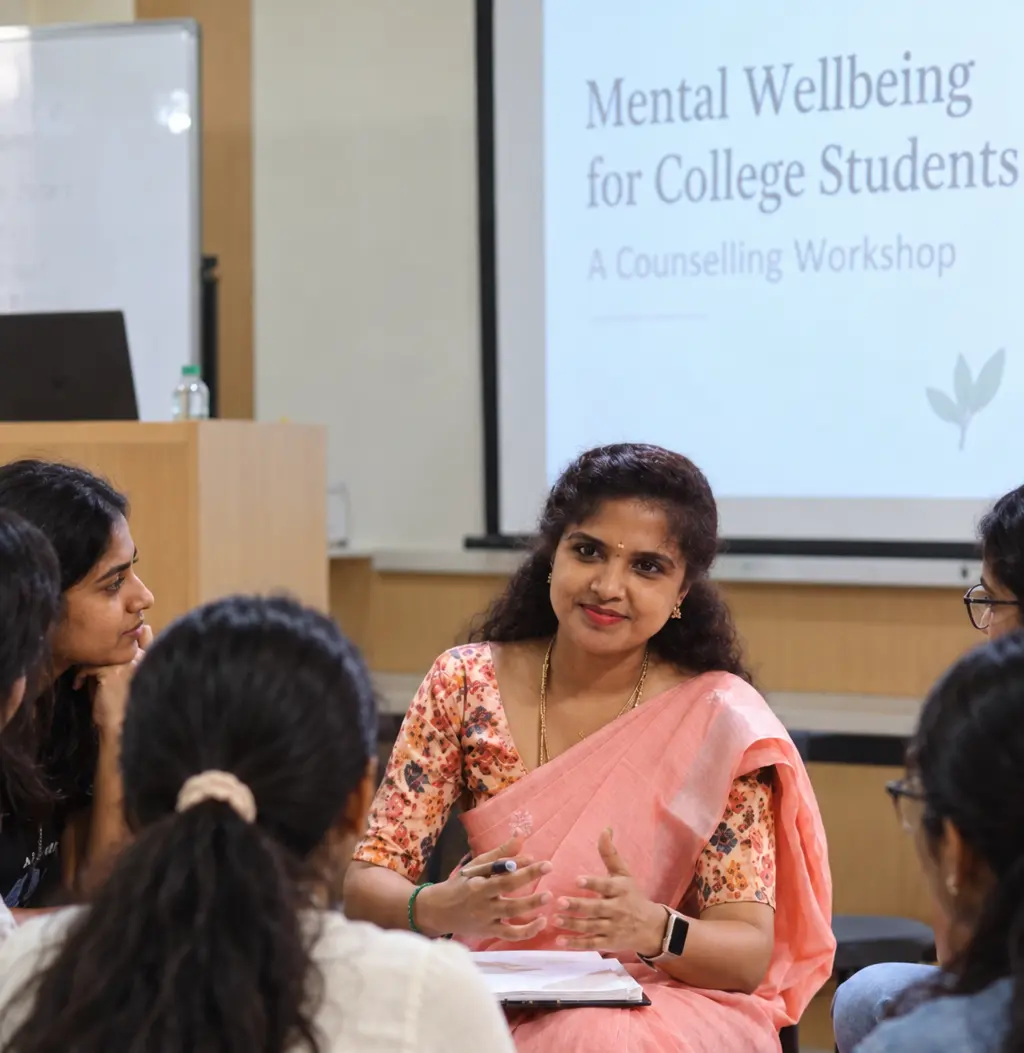
Our Counselling Psychologist – Lalitha Manivel, recently engaged in an insightful discussion with Dr. R. Vasudevaraj, Principal of SRM Arts and Science College, on student wellbeing and the importance of psychological support within educational settings.
At LM Wellbeing Psychological Services, we work with educational institutions to support the psychological and emotional wellbeing of students and young adults.
Our work addresses the challenges students commonly navigate, including academic pressure, career uncertainty, relationships, family expectations, self-esteem and emotional wellbeing.
Through meaningful discussions, awareness initiatives and psychological support, we help students develop healthier coping strategies, build emotional awareness and strengthen resilience. We also support educators in fostering a more psychologically supportive environment where students feel understood, supported and better equipped to navigate their challenges.

How It Works?
From First Conversation to a Running Student Program
01
Initial Consultation
A conversation with the principal, dean or student affairs team to understand your student population, current support systems, concerns and goals. There is no obligation.
02
Student Wellbeing Needs Assessment
We look at student numbers and year groups, academic pressures, existing counselling or mentoring arrangements and the areas you want to prioritise.
03
Program Planning & Implementation
Together we agree on session types, delivery format and scheduling around your academic calendar, and on how students will hear about the program and book a session.
04
Review & Continuous Improvement
Review meetings use aggregated, anonymised feedback to look at participation and adjust the program. Individual student sessions and records are not shared, in line with confidentiality and professional ethics.

What Your College May Gain From a Counselling Program?
Results differ between institutions and depend on how a program is planned and used. These are benefits a college can reasonably aim for, not guaranteed outcomes.
Earlier Access to Psychological Support
Students may reach a counsellor sooner, while a difficulty is still manageable, instead of waiting until it has grown heavier.
Improved Student Emotional Awareness
Students may become better at recognising stress, low mood and burnout in themselves, and at understanding what is behind them.
Healthier Coping and Resilience Skills
Practical ways of handling pressure, setbacks and results may help students respond to hard periods with more steadiness.
A More Supportive Campus Environment
Open conversations about mental health may make classrooms, hostels and friend groups more understanding places to be.
Better Awareness of Help-Seeking Options
Students and staff may know what support exists, how to reach it and what happens after they ask.
Stronger Student Support and Referral Pathways
Clear routes between faculty, student affairs, counselling and outside specialists may make it less likely that a struggling student goes unnoticed.
Meet Your Psychologist
A counselling psychologist who understands student life
Lalitha Manivel is the founder of LM Wellbeing Psychological Services and a qualified counselling psychologist. Her practice is grounded in empathy and cultural sensitivity, and sessions are offered in English and Tamil.
Alongside this college program, LM Wellbeing offers education and student counselling and a school counselling program. Lalitha plans each institutional program around the college’s own students and schedule, with confidentiality respected throughout.

Programs We Offer
Program formats designed around the college year
From confidential one-to-one sessions to campus-wide awareness, each format can be placed where it fits your timetable and student support framework
Individual Student Counselling
- What it involves?
- Confidential one-to-one sessions, offered as appointment slots during college hours or by prior arrangement.
- Who it helps?
- Students dealing with anxiety, family pressure, relationship difficulties or low mood.
- Where it fits?
- Through the academic year, with extra capacity around exams and results if agreed.
Group Counselling Sessions
- What it involves?
- Small facilitated groups with a shared theme, meeting over a few sessions.
- Who it helps?
- Students facing homesickness, social pressure, exam stress or the first-year adjustment.
- Where it fits?
- After first-year orientation or at the middle of a semester.
Emotional Wellbeing & Life Skills Workshops
- What it involves?
- Interactive sessions on emotional regulation, communication, sleep, time management and digital habits.
- Who it helps?
- Students who want practical tools, including those who would not book counselling themselves.
- Where it fits?
- Within tutorial, value education or student development hours.
Academic Stress & Examination Support
- What it involves?
- Sessions before and during exam periods on planning, concentration and managing anxiety, with support after results.
- Who it helps?
- Students worried about backlogs, fear of failure or family expectations around marks.
- Where it fits?
- Ahead of internal assessments and semester examinations.
Faculty Awareness & Student Referral Training
- What it involves?
- Sessions for faculty, class advisors, wardens and student affairs staff on noticing distress, responding respectfully and referring.
- Who it helps?
- Staff who are often the first to notice a struggling student and are unsure what to do.
- Where it fits?
- At the start of the academic year or on staff development days.
Student Mental Health Awareness Sessions
- What it involves?
- Larger talks on common student experiences, stigma and how to seek support.
- Who it helps?
- Students who hesitate to approach anyone because they fear being judged.
- Where it fits?
- Orientation week, mental health days or department events.

Why It Works?
Why colleges choose to work with LM Wellbeing?
Students are more likely to use support that feels approachable and relevant to their lives. LM Wellbeing’s counselling is led by a qualified psychologist and shaped by an understanding of the expectations many Tamil Nadu families place on education, results and careers.
How Your School Can Connect With Us?
Sessions focus on helping students understand what they are experiencing and build practical ways of coping. The program also works on the surroundings: when faculty know how to refer and students know what to expect, reaching out becomes easier.

Frequently Asked Questions
Questions from principals, deans and student affairs teams
Common questions from college leaders considering a student counselling and mental health program.
What types of challenges can college students discuss?
Exam stress, backlogs, career worries, homesickness, friendship or relationship difficulties, family expectations, low mood, anxiety, sleep and social media pressure are all common starting points. Students do not need a clearly defined problem before speaking to a counsellor.
Can the program be customised for our institution?
Yes. Components, number of sessions, student groups and timing are planned around your institution after an initial consultation. A pilot for one department and a full campus program can look quite different.
How is student confidentiality maintained?
Individual counselling information is not routinely shared with college management. Exceptions apply only where the law, professional ethical standards or a serious safety concern requires it, and students are told about these limits before counselling begins. Reports to the college use aggregated information, not identifiable records.
Can the program include workshops for faculty members?
Faculty awareness and referral guidance sessions can be discussed as part of the program. They cover noticing when a student may need support and how to refer, and they do not turn faculty into counsellors. Content and format are confirmed during planning.
How can our college arrange an initial consultation?
Use the college enquiry form or message us on WhatsApp. Share your college’s size, current support arrangements and what you hope to achieve, and the team will arrange a conversation.